If you've ever looked into getting a custom part 3D printed — or started exploring FDM printing yourself — you've almost certainly run into this question within the first five minutes: which filament should I use?
PLA, ABS, and PETG are the three most widely used materials in FDM printing. Each one excels in certain situations and falls short in others. Choosing the wrong material can mean a part that warps, cracks, melts, or simply doesn't perform the way you expected. This guide helps you make the right call.
Why Does Material Choice Matter?
The filament you pick directly impacts how your part performs in the real world.
FDM printing works by melting a thermoplastic filament and depositing it layer by layer to build a 3D object. Different materials melt at different temperatures, bond differently between layers, and behave very differently once the print is complete.
Just like choosing between wood, aluminum, or plastic for a traditional manufacturing job, the filament directly affects strength, flexibility, heat resistance, surface finish, and durability. Getting this right is one of the most important decisions in the entire printing process.
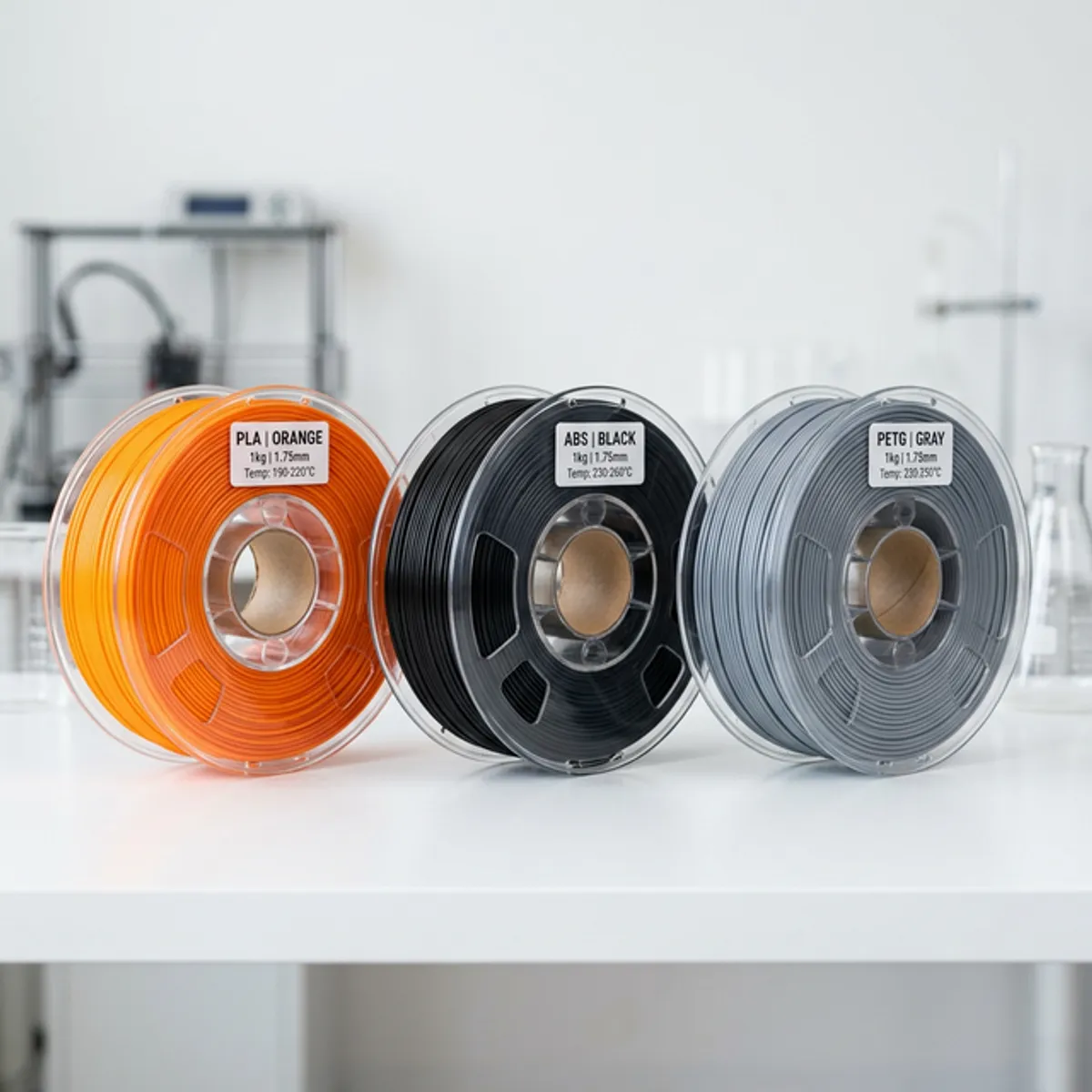
The Three Main Materials
A detailed breakdown of PLA, ABS, and PETG.
Polylactic Acid
Bio-based · Easy to print · Great surface detailPLA is a bio-based thermoplastic derived from renewable sources like cornstarch or sugarcane. It's the most popular 3D printing material in the world — easy to print, produces clean results, and available in virtually every color and specialty blend imaginable.
- Decorative models
- Concept prototypes
- Architectural scale models
- Educational projects
- Cosplay props
- Indoor display parts

Advantages
- Very easy to print, minimal warping
- Excellent dimensional accuracy
- Wide range of specialty blends
- Eco-friendlier than petroleum plastics
- Most affordable option
Disadvantages
- Poor heat resistance — deforms at 60°C
- Brittle under sudden impact
- Degrades under UV and moisture
- Not food-safe due to layer porosity
Acrylonitrile Butadiene Styrene
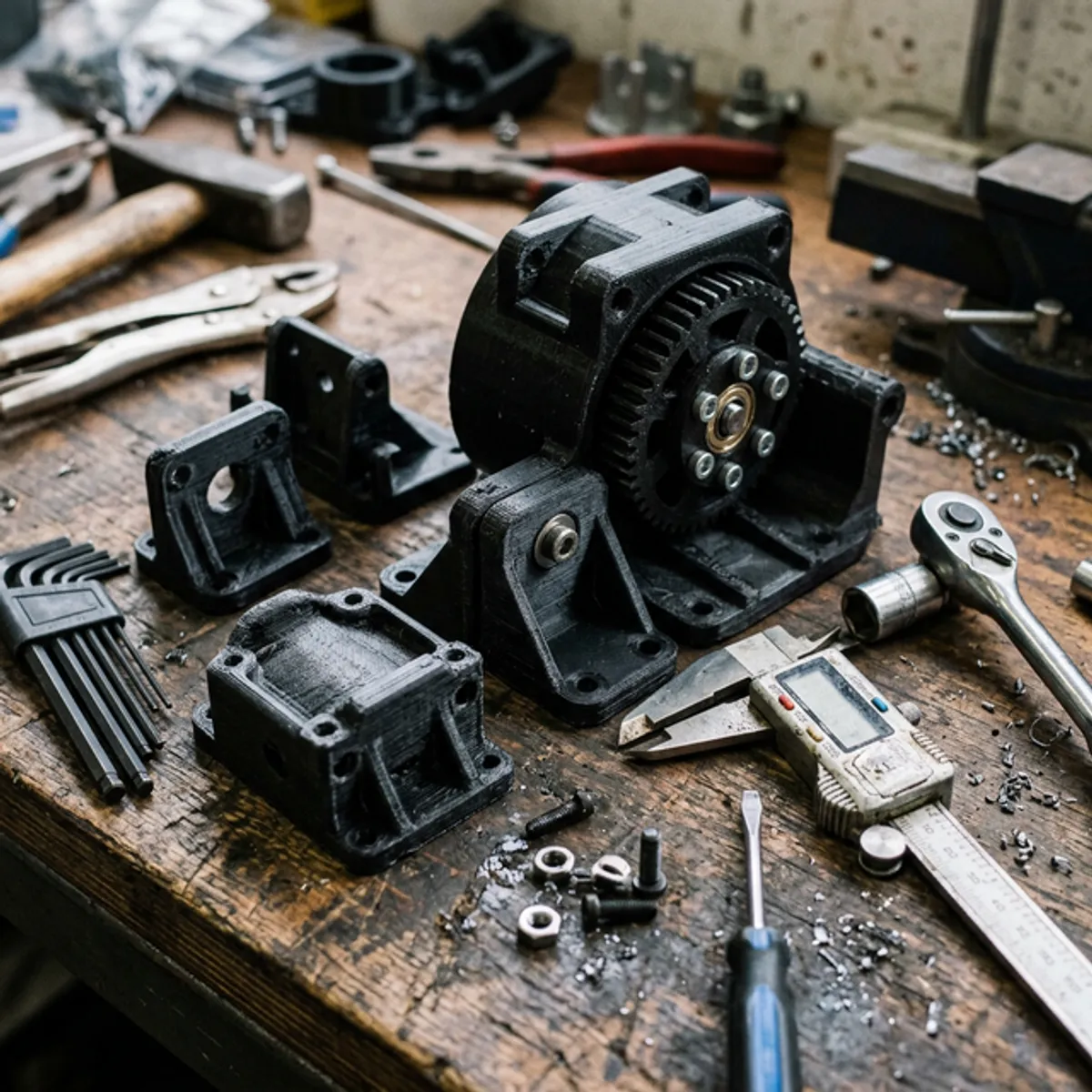
Petroleum-based · Tough · Heat-resistantABS is a petroleum-based thermoplastic used in injection molding for decades — it's the same material in LEGO bricks and many automotive components. Known for its toughness and heat resistance, though significantly harder to print than PLA.
- Functional mechanical parts
- Automotive interior components
- Electronic enclosures
- Tools and jigs
- Parts needing post-processing
- Injection-mold simulation
Advantages
- Strong and impact-resistant
- High heat tolerance
- Acetone-smoothable to near-injection finish
- Can be drilled, tapped, and machined
- Good for functional end-use parts
Disadvantages
- High warping — needs enclosed printer
- Emits fumes — needs ventilation
- Less consistent results vs PLA/PETG
- Shrinkage reduces dimensional accuracy
Polyethylene Terephthalate Glycol
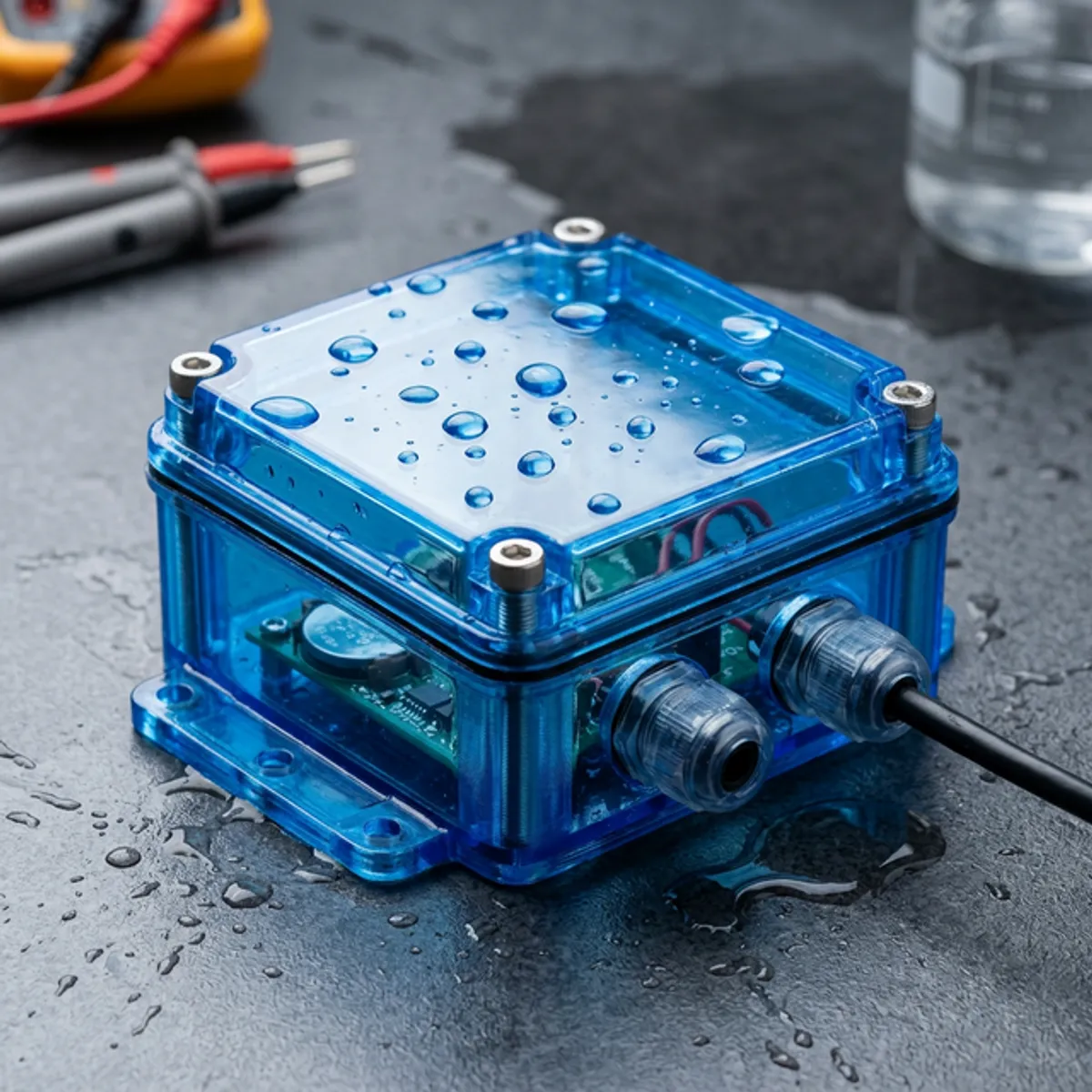
Modified PET · Strong · Moisture-resistantPETG is a modified version of the PET plastic used in water bottles, with glycol added to improve printability. It combines PLA's ease of printing with ABS's toughness and chemical resistance — the go-to for professional and industrial 3D printing applications.
- Mechanical parts
- Structural components
- Waterproof applications
- Outdoor parts
- Engineering prototypes
- Containers and enclosures
Advantages
- Excellent layer adhesion across all axes
- Low warping, easy to print reliably
- Chemical and moisture resistant
- Durable and slightly flexible
- Good for semi-transparent prints
Disadvantages
- Tends to string between features
- Lower heat resistance than ABS
- Harder to sand and post-process
- More expensive than PLA
Frequently Asked Questions
Can I mix PLA and PETG in the same print?
Not easily. They print at different temperatures and don't bond well together. Multi-material prints using PLA and PETG typically require a dedicated multi-extruder setup and careful calibration.
Is PETG food safe?
Standard PETG is considered food-compatible, but layer porosity in FDM prints creates gaps where bacteria can grow. For true food-safe applications, you need a food-safe certified filament, a sealed surface finish, and ideally a stainless steel nozzle.
Why does ABS warp so much?
ABS shrinks as it cools, causing layers to pull apart from the bed or each other. An enclosed printer traps heat and slows cooling significantly. A properly heated bed also helps the first layers bond correctly.
Which material is the strongest?
For pure tensile strength, PETG and ABS are very close. ABS has better heat resistance while PETG wins on layer adhesion and moisture resistance. For impact resistance, ABS is typically toughest. For most functional applications, PETG is the most reliably strong material to print with.
What about TPU, Nylon, or Resin?
PLA, ABS, and PETG cover the majority of FDM use cases. TPU is used for flexible parts. Nylon is used for high-stress engineering components. Resin printers achieve much finer detail but at a higher cost and completely different process.
Not Sure Which Material to Use?
Our team works with engineers, startups, and makers every day. Tell us about your project and we'll recommend the right material, process, and finish.
Request a Free Quote